There is more to crochet hooks than most know. Crochet hooks are more complex than they seem. There are different sizes, different types and different handles, wow what to choose?!
If you’re new to crochet (or feeling confused by hook options), this guide will walk you through crochet hooks explained simply, so you can choose the right hook for your project
This post contains affiliate links. I may earn a small commission at no extra cost to you.
What Is a Crochet Hook?
A crochet hook is a tool used to pull yarn through loops to create crochet stitches.
Every crochet hook has:
- A handle (grip area)
- A shaft (the length of the hook)
- A hook (the curved tip that catches yarn)
Crochet Hook Sizes Explained
Crochet hook sizes affect:
- Stitch size
- Fabric drape
- Overall project size
Common Crochet Hook Sizing Systems
Hooks are labelled in different ways depending on where they’re made.
You may see:
- Metric sizes (mm)
- US letter sizes (H, I, J, etc.)
- UK sizes (less common now)
For beginners, millimetres (mm) are the easiest to follow.
Beginner-Friendly Hook Sizes
If you’re just starting out, these sizes are ideal:
- 4.0 mm
- 4.5 mm
- 5.0 mm
- 5.5 mm
These sizes work well with most beginner yarns and are easier to control. To be honest these are my most used hook sizes
Types of Crochet Hooks
Not all crochet hooks are the same. Let’s break it down
Inline vs Tapered Hooks
This refers to the shape of the hook head.
Inline hooks:
- Flat throat
- More uniform shaft
- Produce consistent stitches
- Good for beginners
Tapered hooks:
- Rounded head
- Narrower throat
- Allow faster stitching
- Preferred by experienced crocheters
This is all about preference
Ergonomic Crochet Hooks
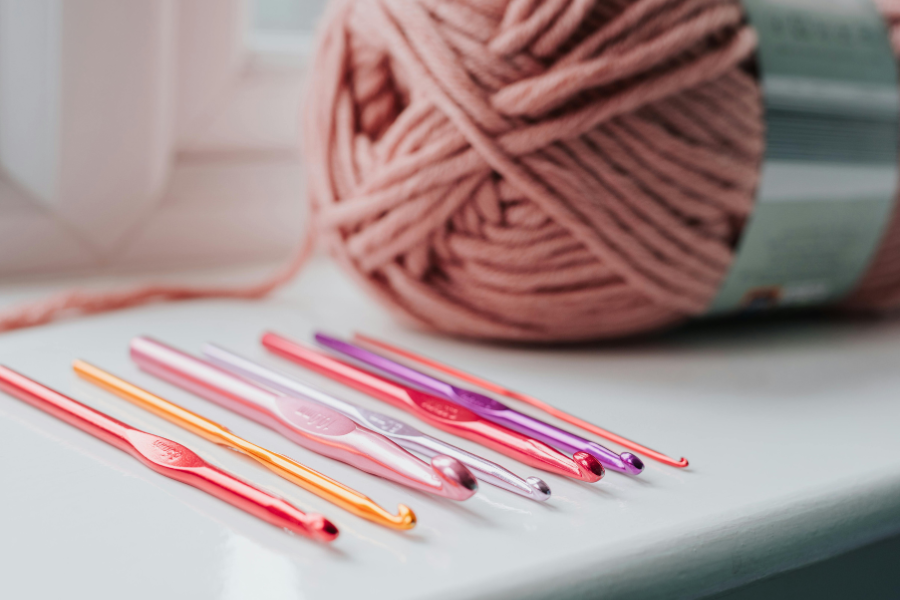
Ergonomic hooks have cushioned or shaped handles designed to reduce hand strain. Here is a great one
They’re great if you:
- Crochet for long periods
- Have hand pain or arthritis
- Find regular hooks uncomfortable
Many beginners find ergonomic hooks easier and more enjoyable to use.
Crochet Hook Materials Explained
The material of your hook affects grip and comfort
Metal Crochet Hooks
Pros:
- Smooth and fast
- Durable
- Great for tight stitches
Cons:
- Slippery for beginners
- Can feel cold in winter
- hurts hands over time
Best for:
- Cotton yarn
- Fine yarns
- Faster crocheting
Bamboo or Wooden Crochet Hooks
Pros:
- Lightweight
- Warm in the hands
- Yarn doesn’t slip easily
Cons:
- Can break if very thin
- Slower stitching
Best for:
- Beginners
- Slippery yarns
- Relaxed crochet sessions
Plastic Crochet Hooks
Pros:
- Affordable
- Lightweight
- Quiet
Cons:
- Can squeak
- Not very durable
Best for:
- Beginners
- Chunky yarn
- Casual projects
How to Choose the Right Crochet Hook for a Project
When deciding which hook to use, consider:
- Yarn weight (usually listed on the yarn label)
- Pattern recommendations
- Your tension (tight or loose stitches)
- Comfort in your hand
If a pattern says “5.0 mm hook,” start there — then adjust if needed.
Common Beginner Crochet Hook Mistakes
Many beginners struggle simply because of the hook they’re using.
Avoid these mistakes:
- Using a hook that’s too small
- Choosing slippery metal hooks too early
- Ignoring hand comfort
- Using novelty hooks instead of basic ones
A comfortable, mid-sized hook makes learning much easier.
Do You Need a Full Crochet Hook Set?
Not at first. But they are great to have
To begin, you only need:
- 1–2 hooks (4.5 mm or 5.0 mm)
- Medium-weight yarn
Hook sets are great later, once you know what you enjoy using.
Final Thoughts
Choosing a Crochet hook doesn’t need to be hard. The best hook for you is probably the one that is the right size for the patterns and also the one that fits most comfortably in your hand
Start simple, experiment slowly, and don’t worry about owning every single type at once