Needle felting is one of my favorite crafts, but oh my I always have a box of plasters handy. If you have ever accidently stabbed your finger while felting, you know how much it hurts and how off putting it can be. The good news is, needle felting has special safety equipment and things you can do so you have no more ouches.
This guide covers practical needle felting safety tips to help beginners avoid injuries
This post contains affiliate links. I may earn a small commission at no extra cost to you.
Why Needle Felting Safety Matters
Felting needles are:
- Very sharp
- Designed to catch fibres
- Easy to break
Most felting injuries are minor and preventable nearly always
If you have no needle felting supplies, this beginner kit is AMAZING
Use the Right Felting Surface
A proper felting surface protects both your hands and your needles.
Good options include:
- Foam felting mats
- Wool felting pads
- Brush-style mats
Avoid:
- Hard tables
- Soft furniture
- Surfaces that bounce the needle
Keep Fingers Out of the Way
This is the most important safety habit.
Tips:
- Always know where your fingers are
- Work slowly
- Rotate your project instead of your hand
If your finger is under the needle, it will get stabbed eventually.
Use Finger Guards or Leather Protectors
Benefits include:
- Protection from repeated stabs
- Increased confidence
- Reduced anxiety

Choose the Right Needle for the Job
Felting needles come in different sizes and shapes.
Safety tips:
- Start with medium-gauge needles (38 is good)
- Avoid very fine needles at first
- Replace bent or damaged needles
Bent needles are more likely to snap. Here is an awesome post: Easy Needle Felting Projects for Beginners (That Actually Work)
Work Slowly and Gently
Fast stabbing nealry always results in injury
Best practice:
- Use controlled, straight motions
- Let the needle do the work
- Avoid force
Never Pull the Needle Out at an Angle
This is a common beginner mistake.
Why it matters:
- Angled removal snaps needles
- Broken needles can embed in wool
- Snapped needles can cause injuries
Always insert and remove the needle straight up and down.

Store Needles Safely When Not in Use
Loose felting needles are dangerous and often can easily hide in carpets
Safe storage options:
- Needle tubes
- Magnetic containers
Never leave needles loose on tables or cushions.
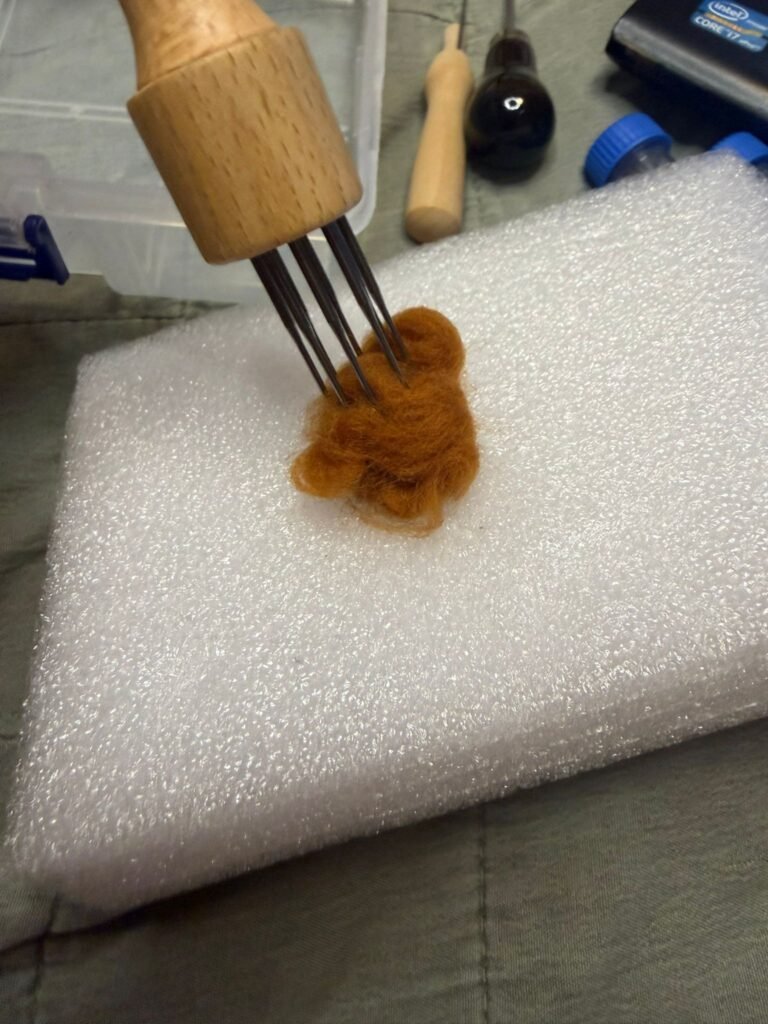
Be Careful with Multi-Needle Tools
Multi-needle tools speed up felting but can be even more deadly
Safety tips:
- Keep fingers far from the stabbing area
- Use only on flat surfaces
- Switch to single needles for detail work
They’re great tools — but just not when they are too close to your fingers
Take Breaks to Avoid Fatigue
Tired hands lead to accidents.
Take breaks if you notice:
- Slowing down
- Tingling fingers
- Reduced control
What to Do If You Get Stabbed
It happens
If you get poked:
- Stop immediately
- Clean the area
- Apply light pressure if needed
- Use a plaster if necessary
Most felting injuries are minor and heal quickly.
Needle Felting Safety for Kids
Needle felting is not recommended for young children without close supervision.
If teaching teens:
- Use finger guards
- Set clear safety rules
- Supervise constantly
Final Thoughts
Needle felting safety is a super important part of needle felting With the right setup, tools, and habits, needle felting is a relaxing.