Needle Felting seems so simple, grab a needle, grab some wool… and stab? Well actually kind of but you do need the correct tool.
This beginner-friendly guide explains all the essential needle felting tools, what each one does, and which ones you can skip as a beginner
Here is an amazing beginner kit, that has everything you need and nothing extra
Some links are affiliate links. I may earn a small commission at no extra cost to you
Do You Need Lots of Tools to Start Needle Felting?
The short answer is: no.
The long answer is also no. Needle Felting is easy to start which is part of what makes it so appealing and popular, especially at the moment. Many beginners buy far more tools than they need, then later on don’t use all the tools at all.
Felting Needles
Felting needles are the most important tool in needle felting. They may all look similar, but are sized differently
How felting needles work
Felting needles have tiny barbs. When you stab the wool, these barbs catch the fibers and tangle them together, gradually creating firm felt. Check out this post for the full run through
Because of this, felting needles are:
- Extremely sharp
- Brittle (they can snap easily, I have sooo many broken ones)
- Designed for stabbing motions only
Single Felting Needles
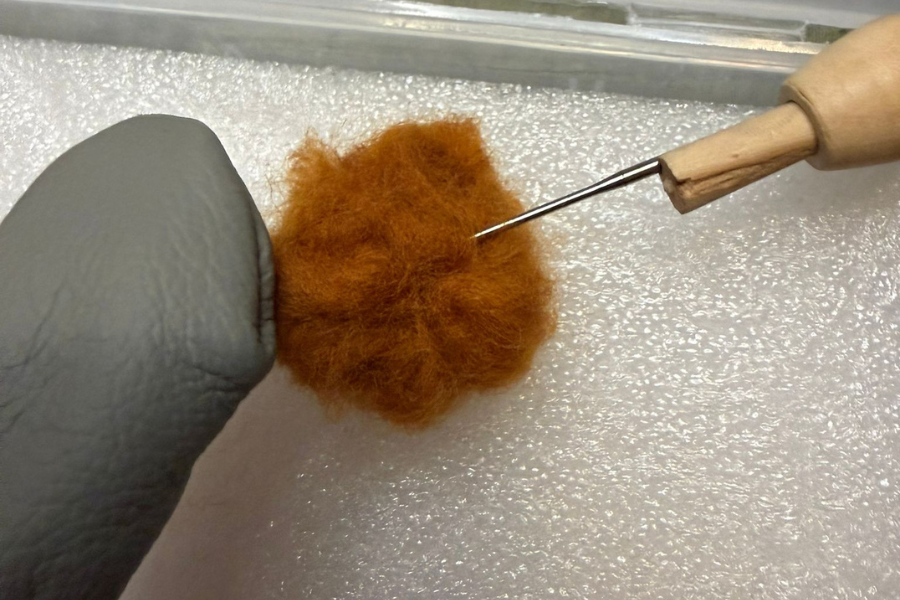
Single needles are the best place for beginners to start.
Why they’re ideal:
- Easier to control
- Easier to learn technique
- Better for detail work
Felting Needle Sizes and Types
Felting needles come in different gauges and shapes.
Common needle gauges
- 36 gauge: Fast felting, shaping large areas
- 38 gauge: General-purpose needle (great for beginners) My fave!
- 40 gauge: Fine detail and finishing
Lower numbers are thicker needles; higher numbers are finer.
If you’re overwhelmed, start with 38-gauge triangle needles.
Multi-Needle Felting Tools
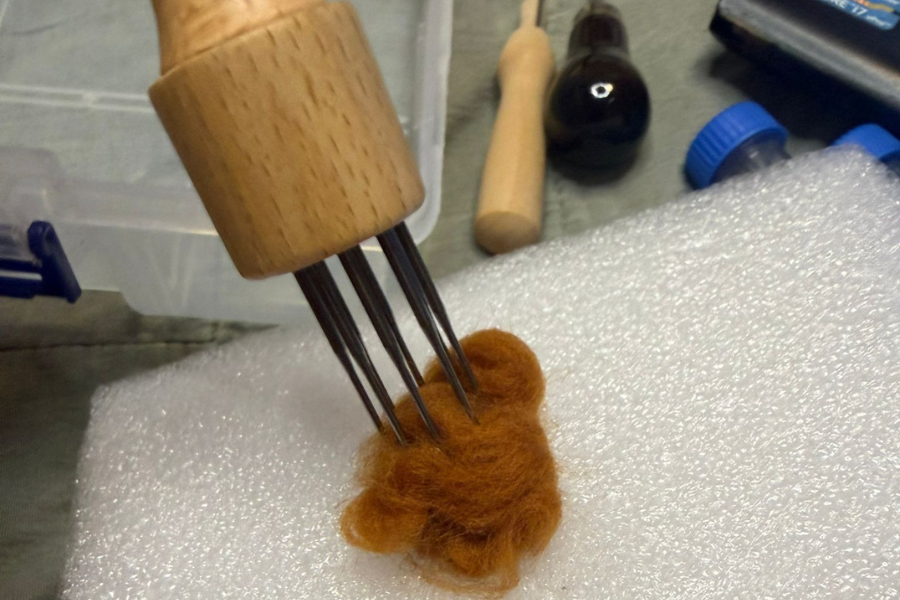
Multi-needle tools hold several felting needles at once.
When to use them
- Shaping large pieces
- Speeding up base forms
- Felting flat areas
Beginner advice
These tools are useful but not essential when starting out. Many beginners find them harder to control at first. I have actually just purchased one recently and while it great at speeding up the process of forming the initial shape, it’s really not an essential tool.
Felting Surface (Foam, Mats, and Pads)
You always need something underneath your wool to protect your needles and work surface.
Foam Pads
Foam pads are the most common felting surface. They do wear out fast though
Pros:
- Affordable
- Lightweight
- Easy to replace
Cons:
- Break down over time
- Can shed foam bits
Wool Felting Mats
Made from compressed wool, these mats are a popular upgrade. Here is my favorite one
Pros:
- Self-healing
- Longer lasting
- More environmentally friendly
Cons:
- More expensive
- Can leave wool fibres on your project
Brush Mats
Brush mats are made of dense plastic bristles. These are honestly what I wouldn’t recommend for beginners
They’re useful for:
- Flat felting
- Fast shaping
They’re optional, but some felters love them.
Finger Guards and Safety Tools
Felting needles are sharp, and finger stabs happen to everyone, to avoid bleeding over your work, like I have many many times before. Wear finger guards. I wear a thumb one and one on my index finger. It does the trick nicely.
Common safety tools
- Leather finger guards
- Rubber finger protectors
- Silicone thimbles
While not required, they’re pretty helpful for beginners.

Wool for Needle Felting
Not all wool works well for needle felting. Not sure what to choose, go for wool batts every time.
Best wool types for beginners
- Core wool: Used for base shapes
- Carded wool (batts): Easy to felt, good coverage
Wool to use cautiously
- Superwash wool (doesn’t felt well)
- Very fine or slippery fibres
Scissors and Small Accessories
Helpful but simple tools include:
- Small sharp scissors
- Tweezers for stray fibres
These are nice but not essential. I especially love my small snipping scissors.

Tools Beginners Can Skip (For Now)
When you’re just starting, you don’t need:
- Electric felting machines
- Large multi-needle rigs
- Specialty finishing tools
Don’t even bother googling these, even advanced felters skip those.
A Simple Beginner Needle Felting Tool List
If you want the shortest possible shopping list:
- 38-gauge triangle felting needles
- Foam felting pad
- Carded wool or beginner kit
- Optional finger guard
That’s enough to complete many projects.
Final Thoughts
Needle felting doesn’t require a huge toolkit, don’t get fooled. A few basic tools is all you need to start!