Best Yarn For Crochet Beginners (Simple Chart)
Choosing the right yarn as a crochet beginner will make a difference to the end result and how crochet goes, especially if you are a beginner. Some yarns tangle and slip more than others, that can be discouraging as a beginner. So let’s talk about the best yarn options for beginners.
Why Yarn Choice Matters for Beginners
Yarn isn’t just about color, the type, weight, and material all affect how easy (or hard!) it is to use.
Choosing the right yarn helps you:
- See your stitches clearly
- Keep an even tension
- Avoid tangles and slips
The wrong yarn can hide mistakes, be slippery, or make your hook snag, not the best when you are a beginner.
What Makes Yarn Beginner-Friendly?
When you’re new to crochet, look for yarn that is:
Easy to see
- Mid-range weights show stitches clearly
- Easy to track
Easy to handle
- Not too fuzzy or slippery
- Doesn’t split when you pull it
Not expensive
- Perfect for practice
- You can buy more and make mistakes guilt free
Now let’s go over the best yarn choices for beginners.
🔹 1. Medium/Worsted Weight Yarn (Best All-Round Choice)
This is the most popular beginner yarn for a reason.
Also called:
- Yarn weight category 4
- Aran weight (in some countries)
Why it’s great for beginners:
- Easy to see and grab with your hook
- Works with many crochet patterns
- Not heavy, not too light
- Ideal for scarves, hats, blankets, home decor
🔹 2. Acrylic Yarn (Affordable & Beginner-Friendly)
Acrylic yarn is often the first yarn crocheters use.
Why it’s a great choice:
- Inexpensive
- Easy to care for (machine washable)
- Wide range of colours
- Good stitch definition
Perfect for:
- Learning stitches
- Practice swatches
- Everyday projects (scarves, dishcloths, blankets)
Acrylic is forgiving and doesn’t stretch too much
🔹 3. Cotton Yarn (Great for Structure & Stitch Definition)
Cotton yarn is smooth and lightweight, with clear stitch definition.
Why you’ll like it:
- Doesn’t split easily
- Dries quickly
- Nice for summer projects and dishcloths
- Great for amigurumi and tighter stitch work
Keep in mind:
Cotton doesn’t have much stretch, so if you’re brand new, it can feel less forgiving than other types
🔹 4. Blended Yarns (Best of Both Worlds)
Blended yarns mix fibres like cotton, acrylic, wool, and sometimes bamboo.
Why they’re worth trying:
- Softer than pure acrylic
- Easier to handle than pure wool
- easy to see
Acrylic-cotton or acrylic-wool blends are especially beginner-friendly.
🔹 5. Avoid These As a Beginner
Some yarn types make learning harder
Fuzzy or “eyelash” yarns
- Hides stitches
- Hard to count stitches
Very fine or lace-weight yarns
- Too small for beginner hooks
- Hard to see your stitches
Super stretchy or slippery yarns
- Can slip off your hook easily
- Makes tension harder to control
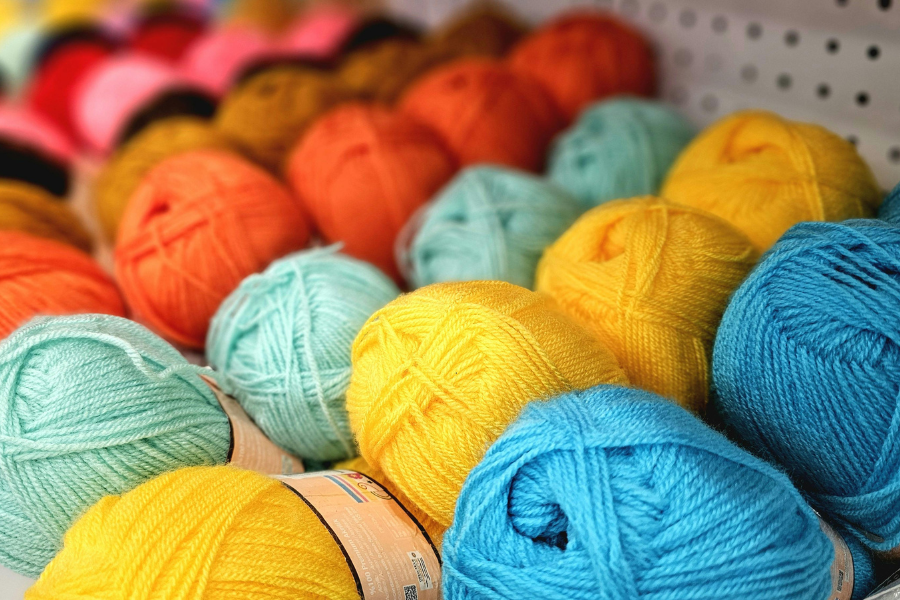
🧶 Yarn Weight Guide (Super Simple)
| Yarn Weight | Description | Good For Beginners? |
|---|---|---|
| #4 Worsted / Medium | Most common yarn | ⭐⭐⭐⭐⭐ Yes |
| #3 DK / Light | Slightly thinner | ⭐⭐⭐✔️ |
| #5 Bulky | Thick yarn, works up fast | ⭐⭐⭐✔️ |
| #1 Super Fine | Very thin | ⭐✔️ Not ideal |
| Fuzzy / Specialty | Novelty yarn | ⭐⚠️ Hard to use |
🧵 Hook Size Matters Too
The yarn and hook go hand in hand.
For worsted weight yarn, beginners usually start with:
- Hook size: 5.0 mm (H-8) or 5.5 mm (I-9)
Bigger hooks make larger loops, which are easier to see and control.
🏷 Tips for Buying Yarn on a Budget
You don’t need expensive skeins to learn:
✔ Choose acrylic or acrylic blends first
✔ Shop multipacks or clearance yarns
✔ Look for sample size skeins
✔ Repurpose old yarn from thrifted projects
🧶 Easy Projects to Try with Beginner Yarn
Once you have your yarn and hook, start with:
- Simple scarves
- Dishcloths
- Granny squares
- Basic beanies
- Simple blankets
Final Thoughts
Crochet is a fun simple craft, learning it can be hard and off putting, to make learning it easier choosing the right yarn type really matters!