Once you finished your crochet project, you will probably notice the edges are wavy, or rippled of flared, rather than a straight line like in the pattern picture. Do not worry, this is vert common and almost always fixable
Lets talk about why crochet edges go wavy and how to fix them
If you are a beginner in crochet, here are some other helpful posts
- 11 Free Easy Crochet Patterns for Beginners | Small Crochet Projects
- Crochet Conversion Chart UK to US | Free PDF Download
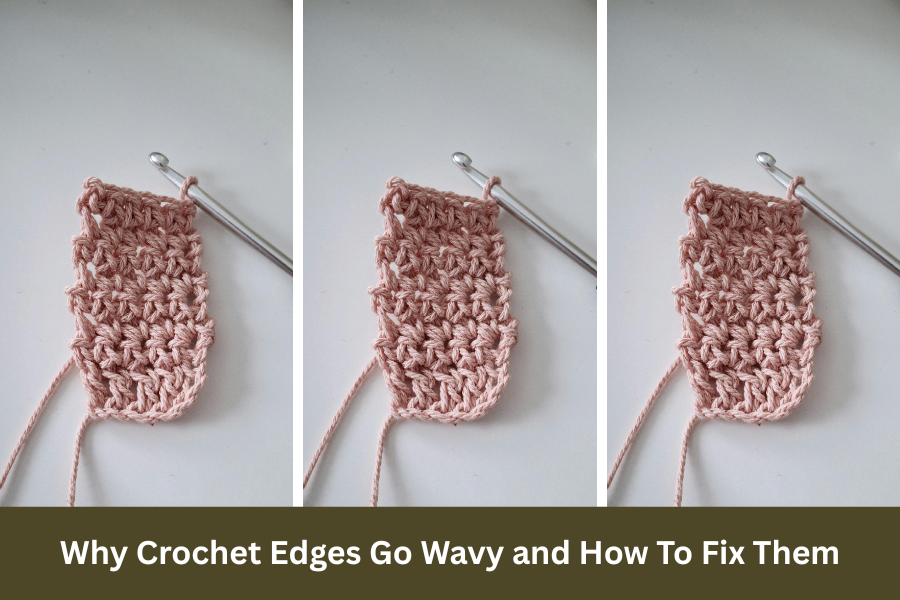
What Do Wavy Crochet Edges Look Like?
Wavy edges may appear as:
- Ripples along the sides
- A flared or ruffled edge
- Corners that curl outward or inward
- A project that won’t lie flat
This can happen on blankets, scarves, dishcloths, and even small swatches, granny squares etc.
1. Too Many Stitches in a Row
This is the number one cause of wavy crochet edges.
When you accidentally add extra stitches, the fabric has nowhere to go, so naturally it starts to ripple.
Why this happens:
- Miscounting stitches
- Crocheting into the turning chain by mistake
- Adding stitches at the start or end of rows
How to fix it:
- Count stitches at the end of every row
- Place a stitch marker in the first and last stitch
- Learn exactly where the last stitch is (it’s often hidden!)
If your stitch count increases, your edges will wave.
2. Incorrect Turning Chains
Turning chains can be sneaky and difficult for beginners
Common turning chain mistakes:
- Treating the turning chain as a stitch when it shouldn’t be
- Skipping stitches incorrectly
- Using the wrong number of chains
How to fix it:
- Follow the pattern’s turning chain instructions exactly
- Decide early if your turning chain counts as a stitch
3. Hook Size Is Too Large
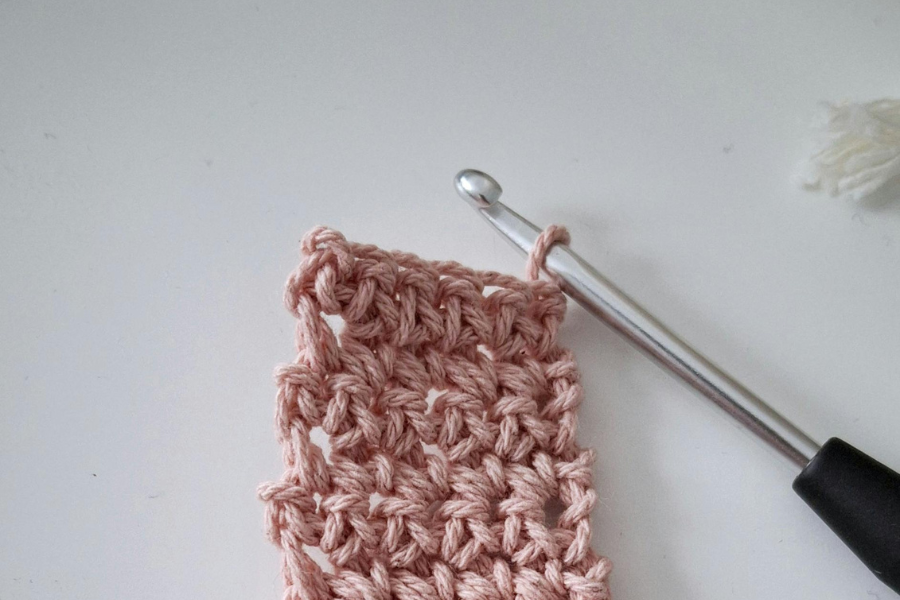
Using a hook that’s too big for your yarn can cause loose stitches that flare out.
Signs your hook is too large:
- Stitches look very open
- Fabric feels floppy
- Edges don’t lie flat
How to fix it:
- Go down one hook size
- Crochet a small test square before starting
- Choose hooks recommended on the yarn label
Sometimes a small hook change makes a huge difference.
4. Inconsistent Tension
Uneven tension can cause some rows to stretch more than others.
Why this happens:
- Relaxing as you get more comfortable
- Crocheting faster
- Holding yarn differently mid-project
How to fix it:
- Slow down
- Take breaks to reset your hands
- Practice consistent yarn tension
5. Adding Stitches at the Edges
Beginners often accidentally add stitches at row ends.
Why edge stitches are tricky:
- They’re harder to see
- Loops twist slightly
- Turning chains disguise the last stitch
How to fix it:
- Use stitch markers on both edges
- Learn to identify the V shape of the stitch
- Avoid crocheting into loose gaps
6. Too Many Increases in the Pattern
If you’re working in the round or shaping, extra increases can create waves.
Common scenarios:
- Increasing every round instead of spacing them
- Forgetting to adjust increases as the project grows
How to fix it:
- Use stitch markers to track increases
- If it ripples, reduce the number of increases
Flat circles stay flat because increases are balanced.
7. Yarn Type Matters
Some yarns exaggerate waviness more than others. More on yarn types here
Yarn that can show waves more easily:
- Very soft acrylics
- Slippery yarns
- Lightweight or thin yarn
How to fix it:
- Choose beginner-friendly yarns with structure
- Avoid fuzzy or novelty yarn when learning
- Try cotton blends for better stitch definition
Can Blocking Fix Wavy Edges?
Sometimes, but not always.
Blocking can help if:
- The waviness is mild
- Tension is slightly uneven
Blocking won’t fix:
- Extra stitches
- Stitching errors
- Increase problems
Think of blocking as a finishing tool, not a repair solution.
How to Prevent Wavy Edges in Future Projects
To avoid wavy edges next time:
- Count stitches regularly
- Use stitch markers
- Match hook size to yarn
- Practice even tension
- Read patterns carefully
These habits make a big difference over time.
Final Thoughts
wavy crochet edges happen to everyone but its especially common for beginners. Its easy to fix and avoid in future projects