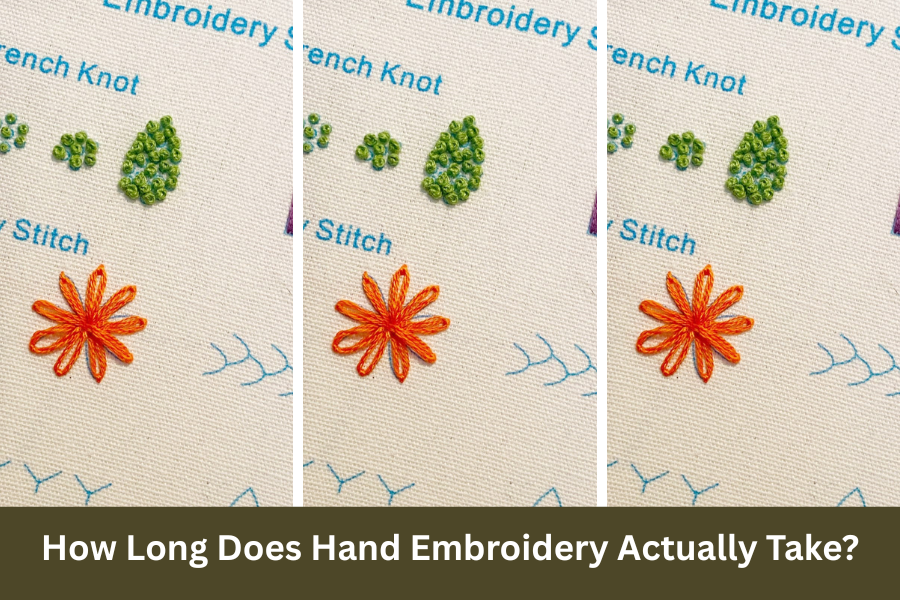
How long does embroidery really take? Let me be honest with you, it takes a long time. Probably longer than you think. You might look at a small hoop and think, “That won’t take long at all,” only to realise hours later that you’re nowhere near finished.
If you’ve ever wondered how long embroidery really takes, the honest answer is: it depends. In this post we will talk exactly why your embroidery might be taking longer than expected
Looking for Beginner Embroidery Ideas
- 50 Embroidery Tips for Beginners
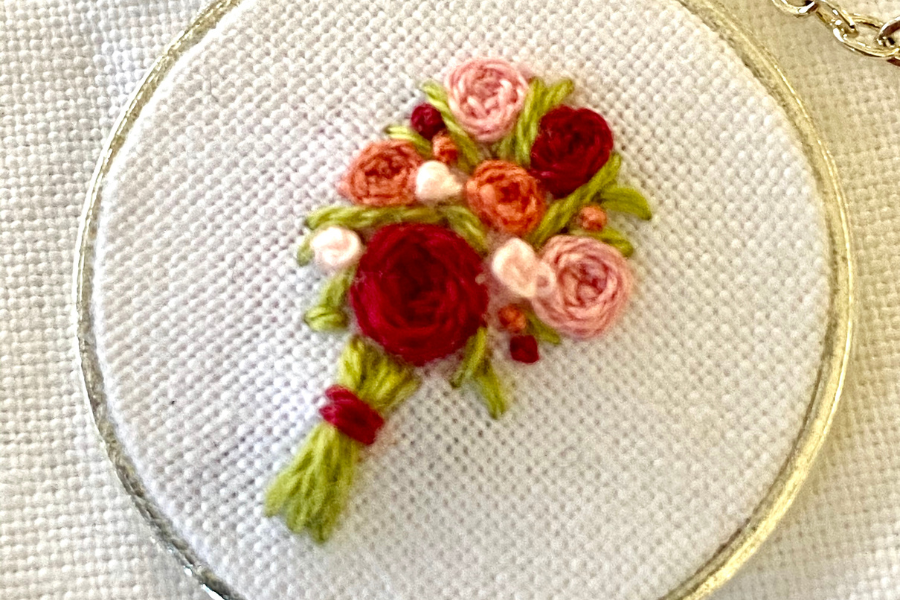
- Hand Embroidery Guide | Miniature Rose Bouquet
- 17 Free Embroidery Patterns
Why Embroidery Takes Longer Than People Expect
Hand Embroidery is a craft that is made to be completed slowly. Machine embroidery is a hole lot of a heck faster but has a completely different finish.
Each stitch involves:
- Bringing the needle up through the fabric
- Positioning the stitch carefully
- Pulling the thread through
- Repeating this hundreds (or thousands) of times
That time adds up quickly
The Biggest Factors That Affect Embroidery Time
No two embroidery projects take the same amount of time. Several key factors determine how long a piece will take.
Size of the Design
This is the most obvious factor.
- Small projects naturally take less time
- Large hoops or dense designs take way longer obvisouly
Even an extra inch of stitching area can add hours to a project.
Stitch Type Used
Some stitches are fast; others are very time-consuming.
Faster stitches include:
- Running stitch
- Back stitch
- Stem stitch
Slower stitches include:
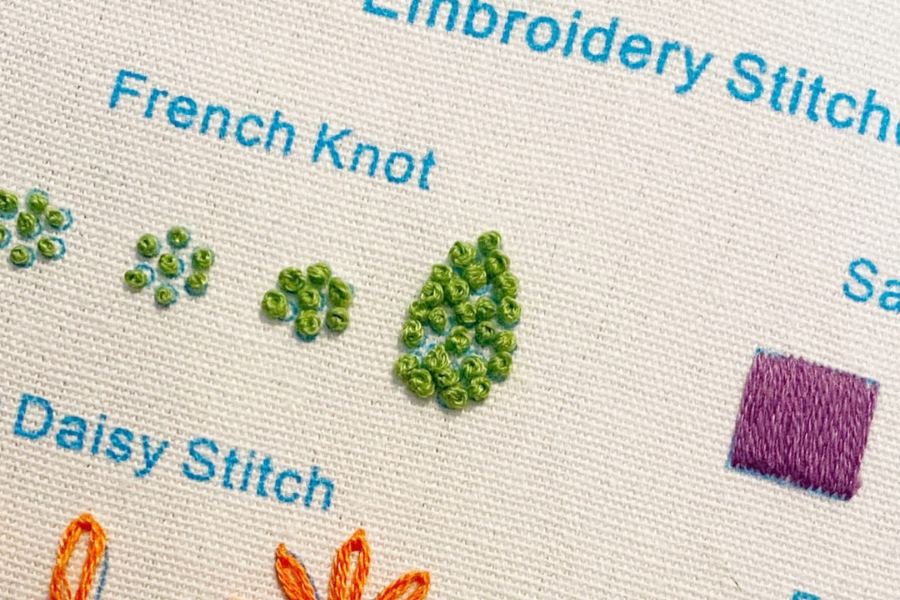
- Satin stitch
- French knots
- Long and short stitch
Designs with lots of filled areas will always take longer than line-only designs.
Number of Colours
Each colour change slows a project down.
More colours mean:
- Stopping and starting threads
- Re-threading needles
- Securing ends more often
Simple, limited palettes are much faster to complete.
Fabric Choice
Fabric does matter
- Tightly woven fabrics can be harder to stitch through
- Slippery fabrics slow you down
- Fabric that grips the thread well feels easier to work with
Beginner-friendly fabrics often speed things up, try use cotton fabric
Skill Level and Experience
Beginners naturally stitch more slowly.
This is completely normal.
As you gain experience:
- Your movements become faster
- You spend less time correcting mistakes
- Your stitch tension improves and you become more fluid in your movements
What takes a beginner 10 hours may take a pro 4–5 hours.
Realistic Embroidery Time Examples
Here are some rough, honest estimates to help set expectations.
Small Design (3–4 inch hoop, line work)
- Beginner: 4–8 hours
- Intermediate: 2–4 hours
Medium Design (5–6 inch hoop, mixed stitches)
- Beginner: 10–20 hours
- Intermediate: 6–10 hours
Large or Detailed Design (8+ inch hoop, filled areas)
- Beginner: 25–40+ hours
- Intermediate: 15–25 hours
Remember take breaks, and work through it slowly, no need to rush
Is Slow Embroidery a Bad Thing?
Not at all.
Many people love embroidery because it’s slow. It encourages:
- Mindfulness
- Focus
- Relaxation
- Creativity
If speed is your main goal, hand embroidery may not be for you, a faster embroidery type such as machine embroidery might be better suited
Tips to Finish Embroidery Faster (If You Want To)
If you’re short on time, a few small choices can help.
- Choose line-based designs
- Limit colour palettes
- Use fewer strands for smoother stitching
- Work in short, consistent sessions
- Avoid overly detailed patterns as a beginner
Final Thoughts
Embroidery takes time, patience, and repetition. That’s just the way the craft is.
- Choose projects you’ll actually finish
- Enjoy the process instead of rushing it