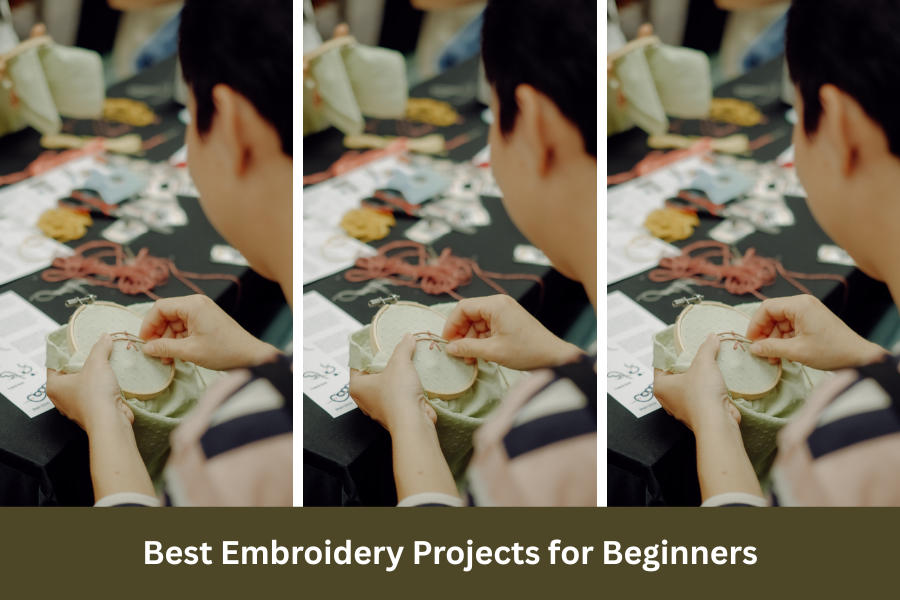
Learning embroidery as a beginner can be hard and frustrating, its a common mistake that beginners choose projects that are too detailed and too advanced for their skill level. The good news is, there is a bunch of tutorials and patterns made just for beginners. so lets talk about it, embroidery projects that are perfect for beginners.
What Makes an Embroidery Project Beginner-Friendly?
Before choosing a project, it helps to know what not to overthink.
Low-stress beginner embroidery projects usually:
- Use simple stitches
- Don’t require perfect symmetry
- Allow room for mistakes
- Work well even with uneven tension
- Can be completed in a short amount of time
- Are usually on a smaller scale
Great embroidery patterns for beginners
1. Simple Floral Hoop Designs
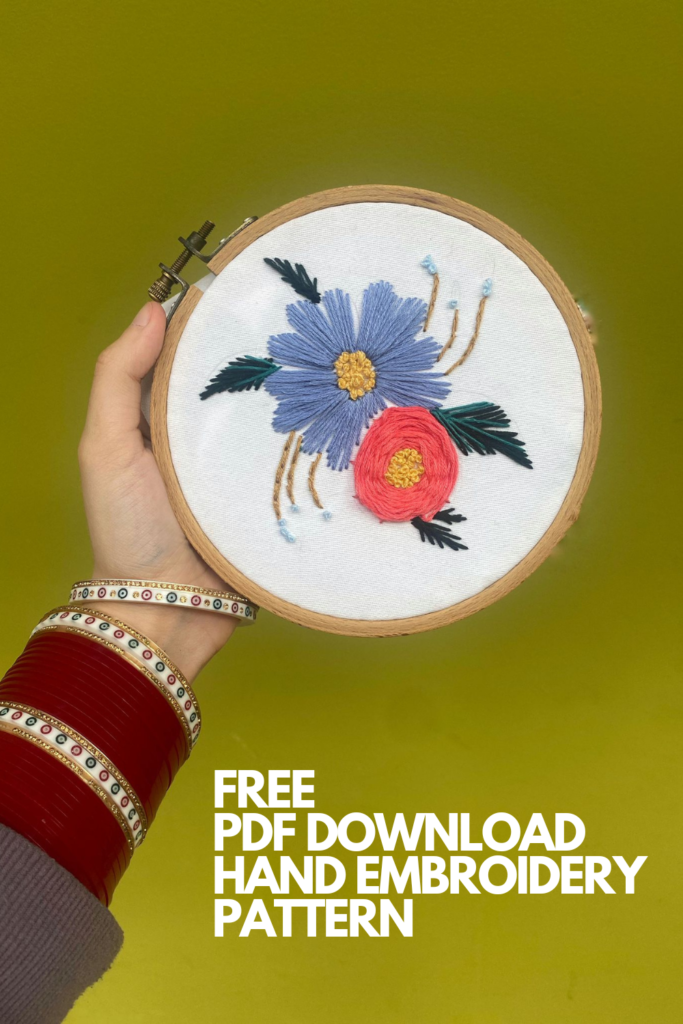
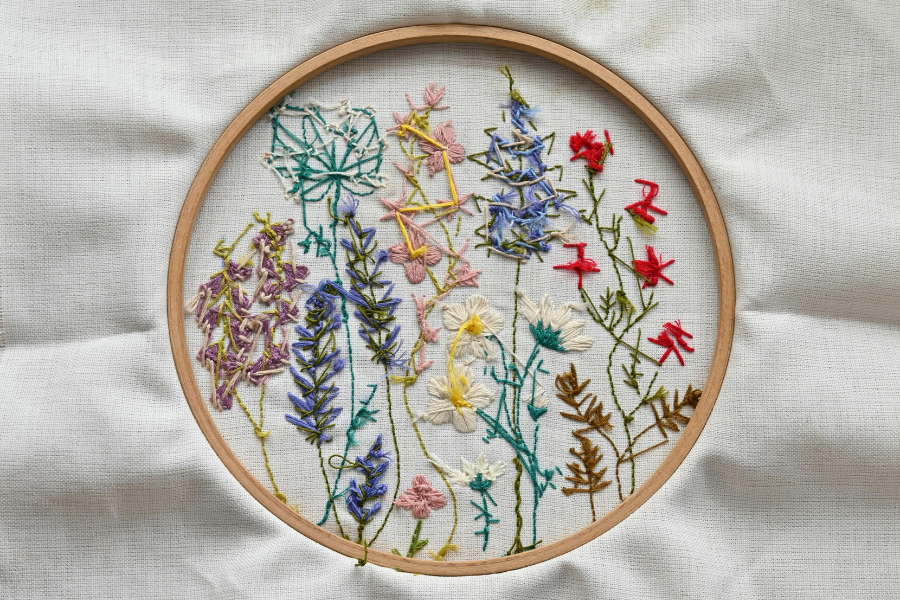
Loose floral embroidery is one of the best beginner projects. This is a great simple embroidery floral pattern, suited for beginners
Why it works well:
- Flowers don’t need to be identical
- Slight variations add character
- You can stop and start easily
Best beginner stitches for floral hoops:
- Back stitch
- Lazy daisy
- Straight stitch
- French knots (optional, not essential)


2. Name or Word Embroidery
Stitching words is surprisingly calming and beginner-friendly, and lettering is just so satisfying I have a entire post on how to do embroidery lettering as a beginner, check it out The Best Embroidery Stitch for Lettering
Why it’s low stress:
- You follow a line rather than filling shapes
- Mistakes are less noticeable
- You can keep designs minimal
Good ideas include:
- A single name
- A short quote
- A simple word like “hello” or “home”
Back stitch or stem stitch works beautifully for text and is easy to learn.
3. Sampler Projects (Without Pressure)
Embroidery samplers are often ignored and seen as redundant but they are great
Why samplers are ideal:
- You can practise multiple stitches
- There’s no “right” outcome
- Each section stands alone
4. Minimal Line Art Designs
Line art embroidery uses clean outlines rather than heavy fills.
Why beginners love it:
- Fewer stitches
- Easy to follow
- Quick progress keeps motivation high
Line art works well for:
- Faces
- Simple animals
- Abstract shapes
- Leaves or plants
These designs look intentional even when stitches aren’t perfectly even.
5. Pattern Transfers on Fabric
Using pre-printed or transferred patterns removes a huge mental load. There are so many great embroidery pattern kits on amazon
Why it reduces stress:
- No drawing skills required
- You always know where to stitch
- Mistakes are easier to fix
You can use:
- Wash-away patterns
- Iron-on transfers
- Light pencil or water-soluble pens
This lets you focus on learning stitches rather than worrying about layout.
6. Small Hoop Projects
Big embroidery projects can feel overwhelming. Smaller hoops are much kinder to beginners. Getting the embroidery project done in one session, boosts confidence for the next one.
Why small projects help:
- Faster sense of completion
- Less fabric to manage
- Easier to finish and display
A 4–6 inch hoop is ideal when you’re starting out.
7. Repetitive Stitch Patterns
Repeating the same stitch can be incredibly soothing.
Great repetitive stitches include:
7 Embroidery Stitches Every Beginner Should Learn First
- Running stitch
- Back stitch
- Seed stitch
- Simple satin stitch (in small areas)
These projects feel almost meditative and are perfect if embroidery helps you relax.
Projects Beginners Often Find Stressful (At First)
It’s not that these are “bad” — they’re just better saved for later.
You may want to avoid initially:
- Large filled satin stitch areas
- Hyper-realistic portraits
- Very detailed patterns
- Dense thread painting
- Copying something from Pinterest and expecting the same result
Tips to Keep Embroidery Low-Stress
No matter what project you choose, these tips help keep embroidery enjoyable:
- Use light-coloured fabric so stitches are visible
- Work in short sessions
- Don’t worry about the back of your work
- Accept imperfections
Final Thoughts
The best embroidery projects for beginners are the ones that you enjoyed making and actually finish. Start small and simple and build your way to more complicated projects.