Lets talk about needle felting for beginners. Needle felting looks way harder than it actually is. If you have been curious about trying and have been pondering whether to try it or not this is your sign to do it! I found this craft was the easiest to pick up and master.
The good news is that needle felting is very beginner-friendly. You don’t need to have naural talent, and you don’t need expensive supplies.
What Is Needle Felting?
Needle felting is a dry felting technique that uses a special barbed needle to tangle wool fibers together. Each time you poke the wool, the barbs catch the fibers and slowly lock them into place, creating a firm shape.
Needle Felting Supplies for Beginners
You only need a few basic supplies to get started with needle felting. This contains affiliate links
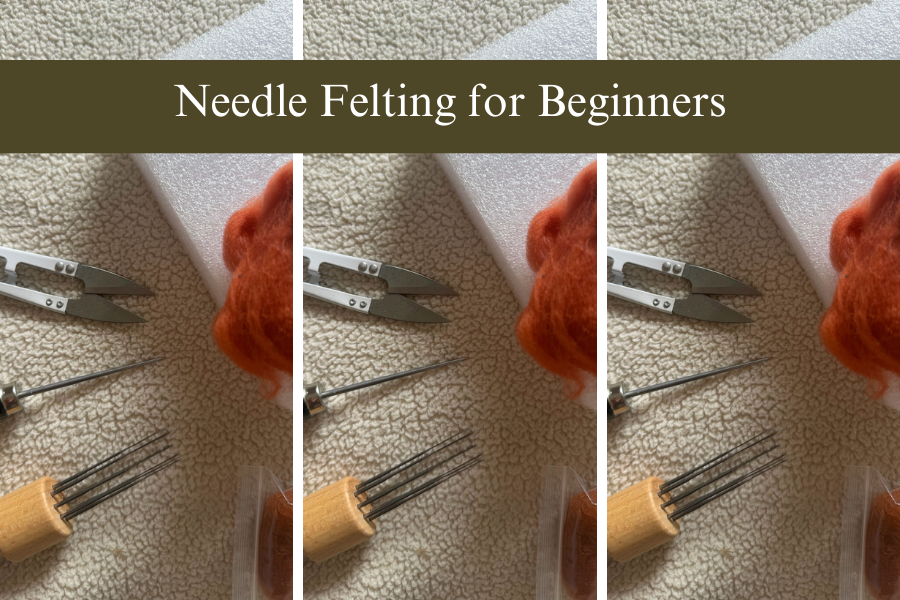
- Felting needles – These are sharp needles with tiny barbs. A medium-gauge needle is ideal for beginners.
- Wool roving or batting – This is the wool you’ll be shaping. Start with basic colors.
- Felting surface – A foam pad or felting mat protects your needle and work surface.
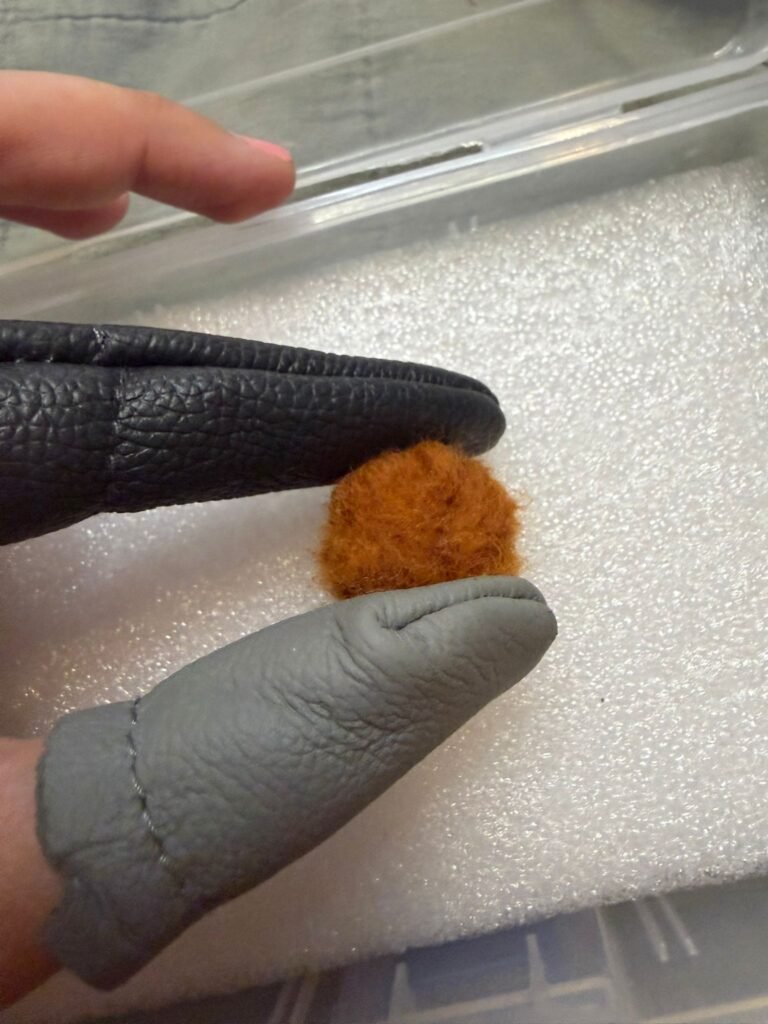
Optional extras include finger guards, fine needles for details, and small scissors, but none of these are essential at the beginning.


Step-by-Step: How to Needle Felt Your First Project
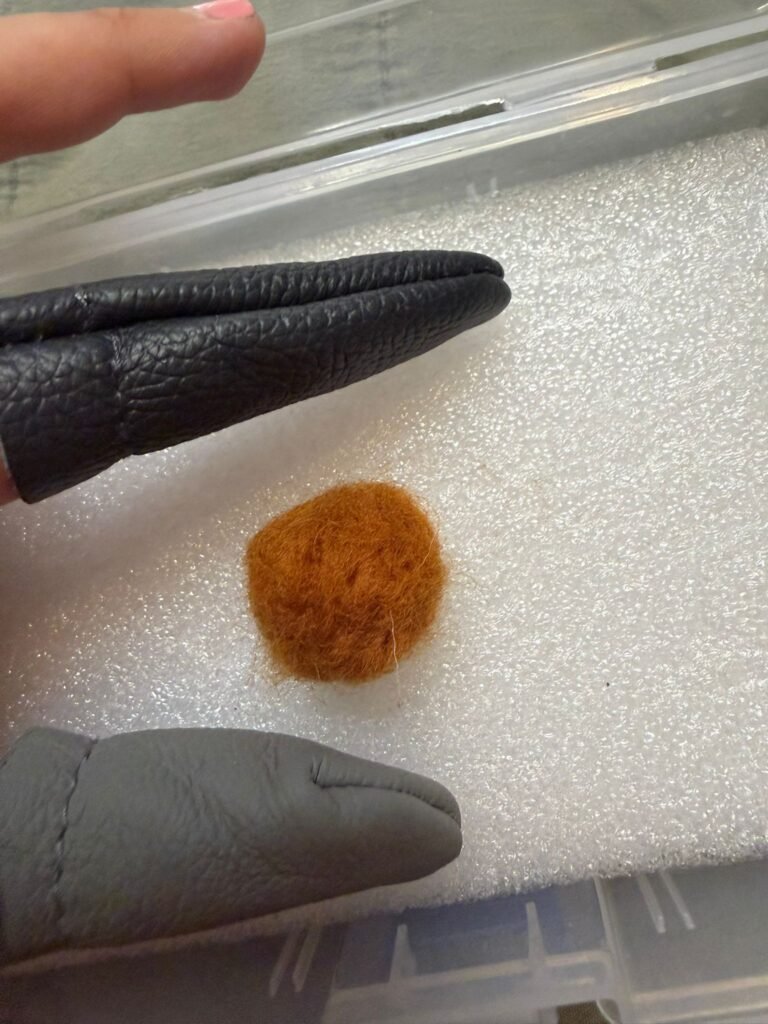
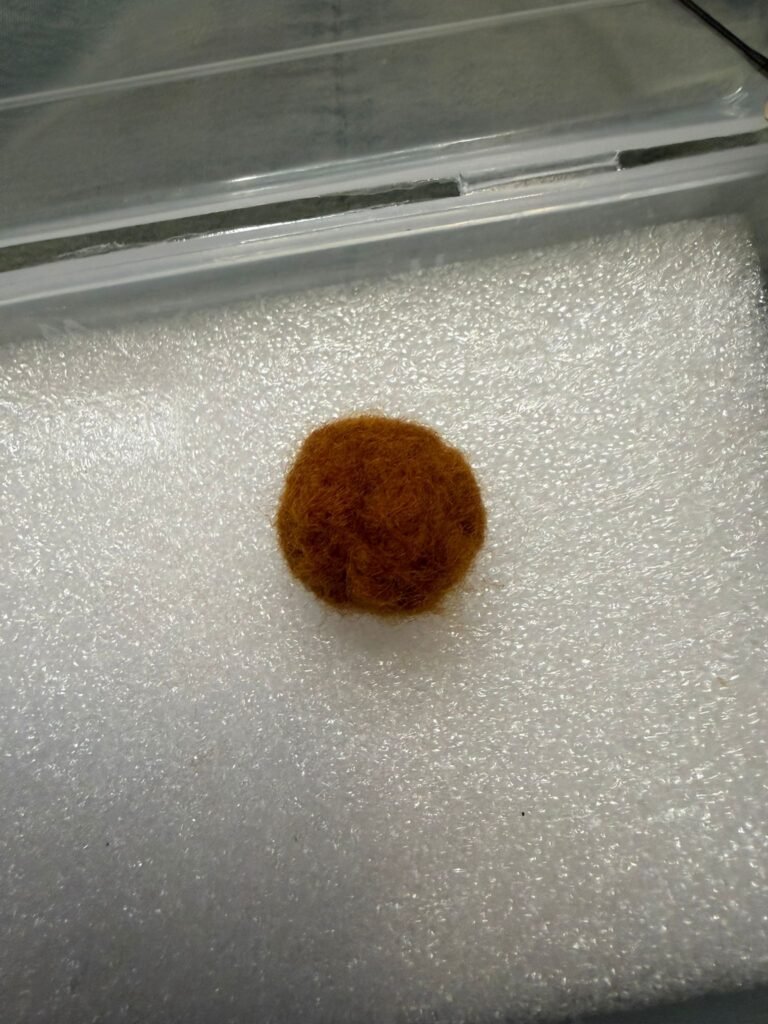
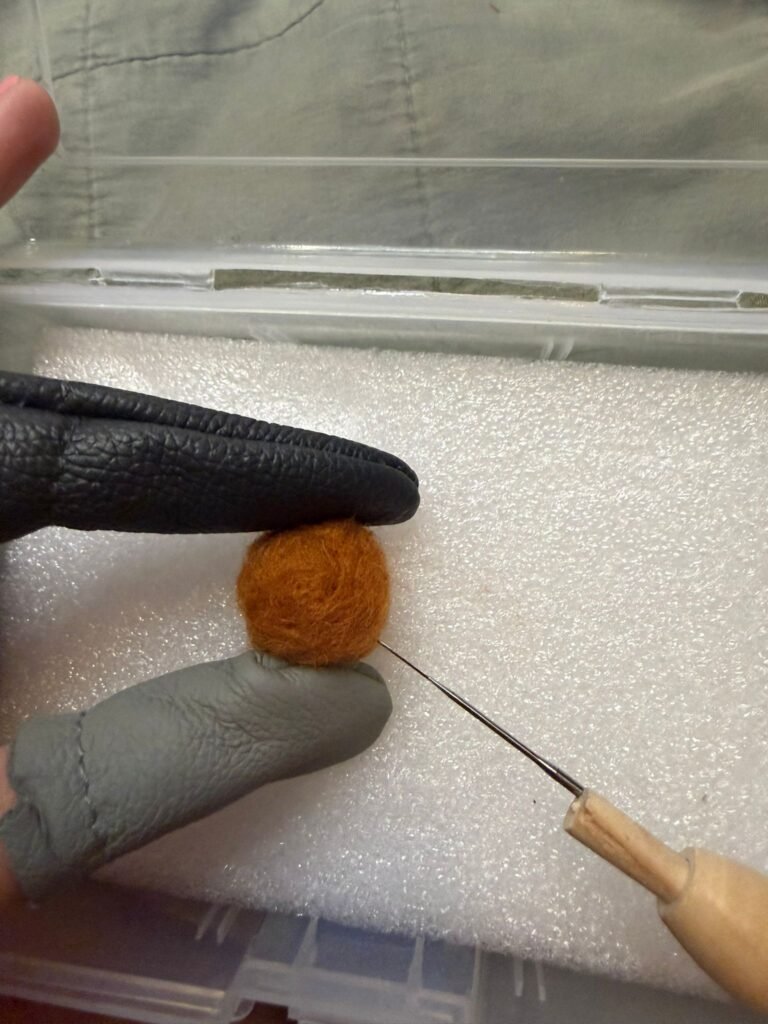
Lets start by making a simple sphere.
1. Prepare the wool
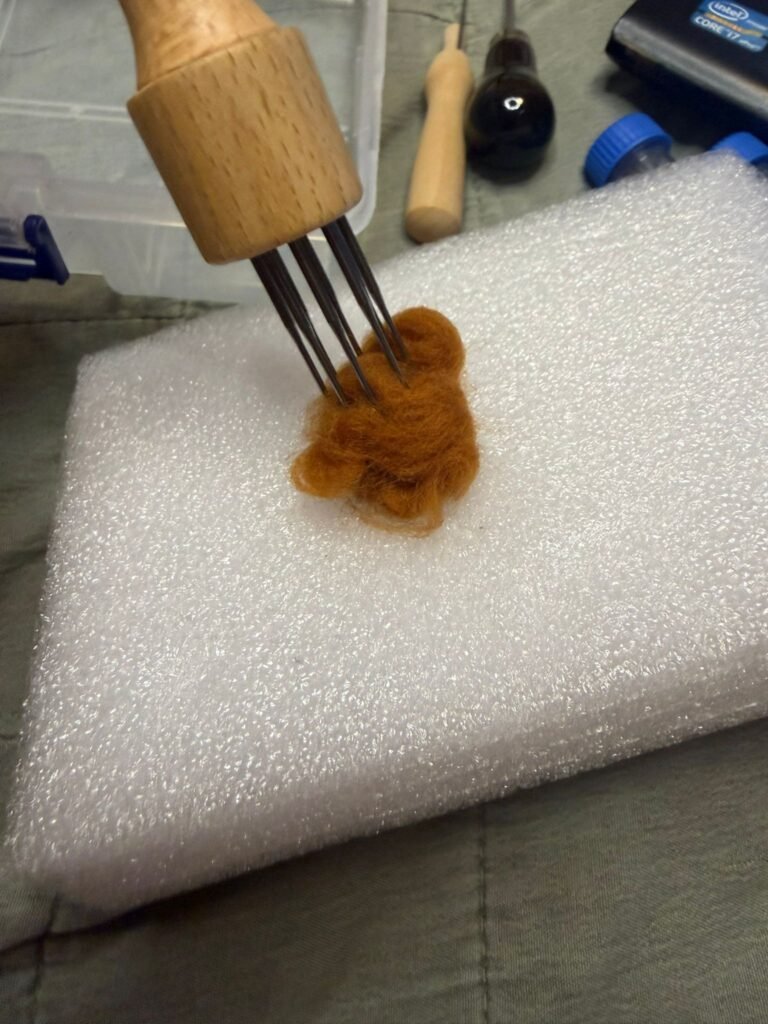
Pull off a small amount of wool and gently roll or fold it into a loose shape. Don’t compress it tightly yet.
2. Start felting
Place the wool on your felting surface and poke straight up and down with your needle. Avoid angling the needle, as this can cause it to break.
3. Rotate regularly
Turn the wool often so it felts evenly on all sides. You’ll notice it slowly becoming firmer as you work.
4. Shape and refine
Once the wool starts to hold together, you can add small amounts of wool to build shape. Keep felting until the piece feels solid, but not too hard
5. Add details last
Details like ears, eyes, or surface decorations should only be added once the base shape is fully firm.




Common Beginner Problems (And Quick Fixes)
If your project looks uneven, feels soft, or won’t hold its shape, this is completely normal. These issues usually come from not felting long enough
Here is a blog post to help you out 15 Needle Felting Mistakes to Never Make
Is Needle Felting Safe for Beginners?
Felting needles are sharp, and yes they do hurt, i have learnt from experience. Using finger guards is great to avoid the ouch.
Final Thoughts
Needle felting projects always look ugly at the start, I call it the ugly stage. Perciever through and trust me what ever you are needle felting will look amazing!